
Cold-chain solutions company COLD & CO has teamed up with Blulog to provide a system for tracking temperatures

Cold-chain solutions company COLD & CO has teamed up with Blulog to provide a system for tracking temperatures in thermal, lightweight containers during the last mile of food delivery to customers.


RFID Journal, Jul 03, 2019


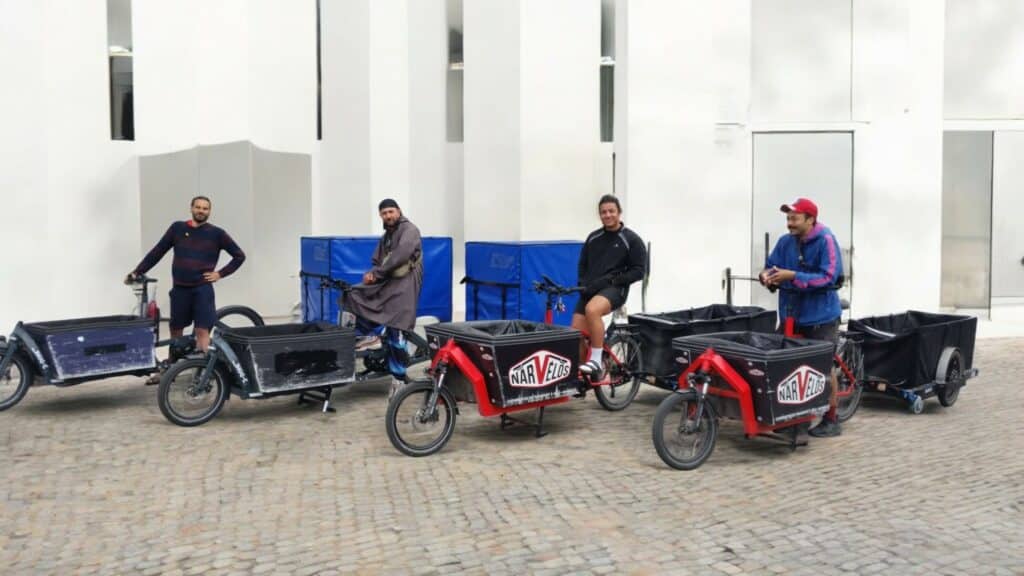
Several European delivery companies are striving to make the last mile of food delivery fast and ecological. Companies like Stuart Logistics provide bicycle-, scooter- or electric vehicle-based delivery of meals or groceries to individuals in Paris and other urban areas.

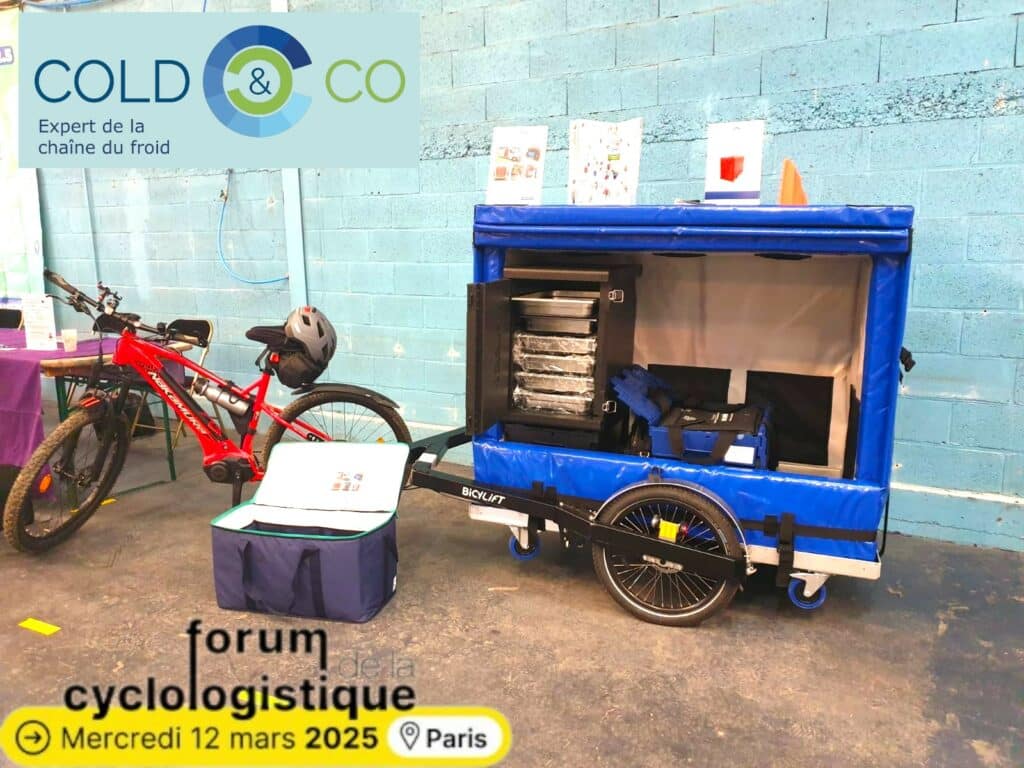
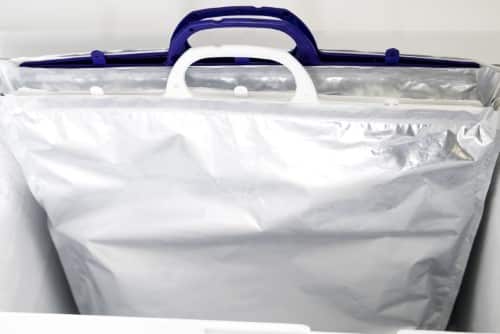
To ensure that the temperature of food being delivered never ventures outside of acceptable thresholds, Stuart is employing a Near Field Communication (NFC)-enabled solution provided by COLD & CO, using Blulog‘s NFC dataloggers. Stuart provides delivery services in 69 cities for more than 2,000 business clients, such as retailers and restaurants. Its delivery personnel utilize electric Nissan eNV 200 vehicles to pick up and deliver goods to customers in their homes or offices. French-Belgian firm COLD & CO has been providing delivery companies with thermal boxes, packaging and coolers for several years, which are typically used in France, Benelux (Belgium, Luxembourg and the Netherlands) and Switzerland. The containers are made of a washable, lightweight nylon material similar to that used to make backpacks. The partnership with Blulog adds a technological feature, however: mobile temperature tracking.

Blulog and COLD & CO had previously built a solution for the transportation of salmon that ensures product is never exposed to unsafe temperature levels, says Jeremy Laurens, Blulog’s cofounder and CEO. Delivery companies like Stuart Logistics are using the system in a similar way, utilizing reusable nylon bags to carry the food. In some cases, the food is picked up hot from a restaurant or café and needs to be delivered quickly so that it retains its heat. In other scenarios, the food is cold and picked up from stores, and must stay within a specific threshold to maintain its freshness.


« COLD & CO commits to offer efficient solutions with adequate isolation and refrigeration, »‘ says Adrien Lehideux, the company’s CEO. The firm seeks to follow temperature requirements based on minimum and maximum temperature ranges, as indicated by food manufacturers and by legislation.ThatLehideux saysis where the company benefits from the Blulog technology « bringing traceability and guarantee of the correct temperature. »


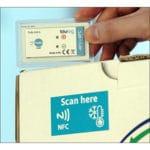
The system consists of COLD & CO‘s CarryTemp XL6 cooler with Blulog’s built-in NFC 13.56 MHz datalogger, which is compliant with the ISO 14443 standard. The thermal container comes with a coolant, in the case of perishable cold goods. The company wants to trace the amount of time the product remains in transit, as well as the product’s temperature range, and to link that data with the actual product being delivered and its location.

When a delivery person picks up goods, that individual uses his or her mobile phone to scan the NFC datalogger. The phone’s built-in NFC reader captures the unique ID number of the datalogger’s tag. When the order is delivered to the customer, the driver again scans the datalogger tag and displays the collected data for the customer in order to indicate the temperature at which the product has been maintained. That data, along with the GPS location, is forwarded to the cloud-based software to create a record of that delivery. Once the delivery is complete, the container is cleaned and returned to participating businesses for reuse.
NFC Tracks Passive Refrigeration for Low-Carbon-Footprint Deliveries

Cold-chain solutions company Cold&Co has teamed up with Blulog to provide a system for tracking temperatures in thermal, lightweight containers during the last mile of food delivery to customers.
Papillomavirus: what you need to know about the vaccine and the vaccination campaign

While the French government has launched a general vaccination campaign (supported by the Institut National du Cancer) against HPV in French secondary schools, aimed at 5th graders, it is still estimated that almost 8 out of 10 people are exposed to Human Papilloma Virus (HPV) in the course of their lives. This high figure may […]

Papillomavirus: what you need to know about the vaccine and the vaccination campaign Lire la suite »

Protecting varnishes and paints from the cold: the unexpected ally of the fine chemistry sector

In the fine chemistry sector, some formulations are extremely sensitive to temperature variations. This is particularly the case for varnishes, paints and glosses for textiles and leather, used in particular for finishing edges and delicate surfaces. These products, often packaged in small bottles of 100 mL to 1 L, must never go below 5°C, sometimes

Protecting varnishes and paints from the cold: the unexpected ally of the fine chemistry sector Lire la suite »

Keeping the Cold Chain during the handling of messenger RNA vaccines against COVID-19

Exposure of Cominarty and Moderna vaccines to room temperature for more than 3 minutes is irreversible as the vaccine is considered thawed. It can’t be re-frozen. In January 2021, the Cold Health Commission “Covid-19” of the « Association Française du Froid » (AFF) published several understanding notes, information and good practices of the cold chain around COVID-19 vaccines. 1.

Keeping the Cold Chain during the handling of messenger RNA vaccines against COVID-19 Lire la suite »

Transport at controlled ambient temperatures between +18°C and +25°C: a logistical challenge for medical devices

The +18°C to +25°C thermal challenge at the heart of medical logistics When it comes to transporting in vitro diagnostic medical devices (IVDMDs), certain entities face a very specific challenge: maintaining a strictly controlled temperature between 18°C and 25°C, whatever the season. In winter as in summer, this requirement for thermal stability is crucial to

Transport at controlled ambient temperatures between +18°C and +25°C: a logistical challenge for medical devices Lire la suite »

Cyclo-logistics and soft delivery modes: what solutions to deliver fresh products?

The COVID-19 event accelerated a changing logistics: home delivery. The energy transition had already pushed the development of soft deliveries with 3 objectives: Decongestion of the city centre; Reduction of noise pollution; Reduction of gases, pollutants and particulates related to fuel consumption. In the case of food e-commerce, an additional dimension is added: cold chain

Cyclo-logistics and soft delivery modes: what solutions to deliver fresh products? Lire la suite »

La Poste decarbonizes its urban logistics 

During the SITL 2023 (International Transport and Logistics Week), La Poste, through the voice of its director of urban logistics (La Poste Courrier et Colis) Jean-Louis Carrasco, explained its plan to completely decarbonize its urban logistics by 2050. La Poste, which is the national postal service of France, is indeed seeking to reduce its carbon

La Poste decarbonizes its urban logistics  Lire la suite »

Urban cold logistics during the Paris 2024 Olympic and Paralympic Games

During the 2024 Olympic and Paralympic Games, Paris will see its urban logistics transformed. The refrigeration logistics sector will have to continue to ensure food distribution for the people of the Paris region, while managing the logistics of supplying the Games in a context of traffic restrictions and changes. The « last mile of cold » (the

Urban cold logistics during the Paris 2024 Olympic and Paralympic Games Lire la suite »

A messenger RNA vaccine against COVID 19, what impact on the cold chain?

Since November 9, several laboratories have announced the development of a vaccine that is more than 90% effective. Pfizer-BioNtech laboratories present their first results obtained on a messenger RNA (mRNA) vaccine. What is the principle of this vaccine? What impact on its cold chain ? Historical vaccines with infectious agents Historically, the first vaccines were

A messenger RNA vaccine against COVID 19, what impact on the cold chain? Lire la suite »

Transport at controlled ambient temperature between +18°C and +25°C : a logistical challenge for medical devices

The thermal challenge +18°C to +25°C at the heart of medical logistics In the field of the transport of medical devices of in vitro diagnostics (IVD), some entities face a particular challenge: maintaining a strictly controlled temperature between 18°C and 25°C, regardless of the season. In both winter and summer, this requirement for thermal stability

Transport at controlled ambient temperature between +18°C and +25°C : a logistical challenge for medical devices Lire la suite »